DU-DA is a space for research and artistic creation at the intersection of art, health, the body, and pedagogies of finitude. Through artistic tools and practices, we create learning contexts and public programmes that bring together expert knowledge, embodied experience, and forms of knowledge that often remain outside institutional frameworks. We work with an international network of collaborators to address questions that are difficult to approach from within a single discipline.
Since 2019, Dying Cool has developed as an ongoing research strand exploring contemporary forms of dying, end-of-life care, rituals, grief, the funeral industry, ecology, and the social and political conditions that shape how we die. This research has also led us to investigate cycles of matter, critical spirituality, more-than-human worlds, and ancestral forms of knowledge.
From this body of work emerges one of our main fields of research: pedagogies of finitude. We understand finitude as an inherent condition of life. We are interested in developing tools and methodologies that enable us to learn how to relate to loss, illness, ageing, dependency, and death—to strengthen our capacity to remain present with, and accompany, that which we cannot control, and in doing so transform the ways in which we live together.
Our work is grounded in more than a decade of experience in research, mediation, teaching, cultural management, and knowledge production, developed both within institutions and through independent practices. This trajectory has shaped a hybrid practice that, in recent years, has found in finitude and death a particularly fertile territory for investigating the political, poetical, and affective conditions of life.
This is why we continue to play, film, cook, plant, nurture, dance, and advocate for other ways of approaching and producing knowledge as an integral part of our practice.
WE
DU-DA is currently formed by Sarai Cumplido, Clara Piazuelo, and Mar Sureda. It was co-founded in 2019 together with Belén Soto and Sonia G. Villar. We also work with a network of collaborators who contribute to different projects, including Adithi Sethi, Helga Juárez, Merche Blasco, Dora Maarz, Sarafina Landis, Neuronalab, La Poderosa, and Jordi Miralles.
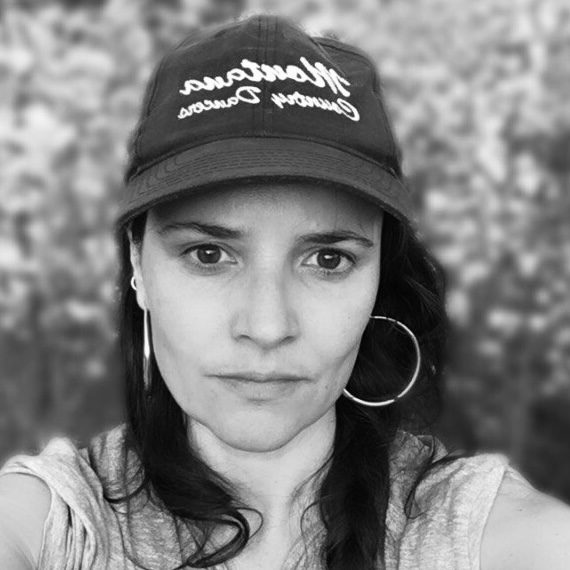
My theoretical and artistic practice resides at the crossroads of language and the body. I am intrigued by textuality in the sense that it can transform into alchemy – embodied poetics functioning as a tool to dismantle our ontological binary. I possess degrees in Art History and Audiovisual Communication, and I embarked on a doctorate in “Artistic Education and Visual Culture.” However, during the second year of composing my thesis, I encountered a crisis, prompting me to initiate writing fiction and poetry on a blog. In 2020, I published my first novel “Año del caballo” with ediciones en el mar.
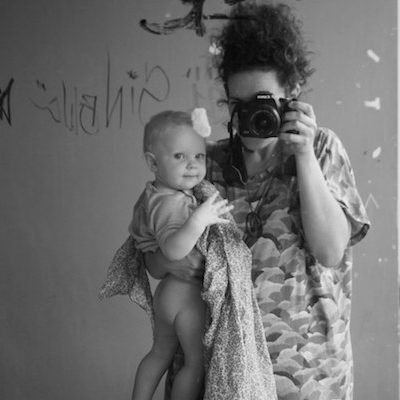
I was a filmmaker and that’s it. Now I investigate the transit through the landscape: I make bread, I grow up and work on the connection of bread with culture, with territory and with memory. I look into the relationships between self-managed and institutionalized practices in the private and the public. From these practices arise texts that I publish in fanzines, digital or non-public contexts. Political projects of long trajectory arise, of pedagogical and resilient character, that coexist with the city of Barcelona, and images and films that are correspondence between me and the invisible that takes me.